CDNL Online Meeting November 2025 – Post-Event Communique

1. Introduction

We are pleased to report the successful conclusion of the online CDNL conference convened on 17 November 2025. The meeting gathered representatives from over 60 national libraries across all world regions, underscoring the global scope and institutional diversity of the CDNL community.

The conference centred on the theme “When collections are threatened: leading national libraries in difficult times”. The session was presided over by Dr. Tomasz Makowski, newly appointed CDNL Chair and Director General of the National Library of Poland, who hosted the proceedings from Warsaw, Poland. He was accompanied by new Vice Chairs: Chinwe Veronica Anunobi, National Librarian and Chief Executive Officer of the National Library of Nigeria and Taner Beyoğlu, Director-General for Libraries and Publications, The National Library of Türkiye.

2. Key Objectives and Agenda

The event focused on the following key objectives:

  • Sharing knowledge and building relationships between participants;
  • Facilitating candid discussions and thoughtful participant involvement.

The agenda included the following sessions:

  • Keynote One by Prof. Peter Stone, President of Blue Shield International,
  • Keynote Two by Dr. Robert Glasser, former UN Special Representative of the Secretary General for Disaster Risk Reduction,
  • Keytnote Three by Oleg Serbin, Director of the Yaroslav Mudryi National Library of Ukraine,
  • Q&A sessions with the keynote speakers,
  • Small group breakout discussions focussed on attendees’ experiences,
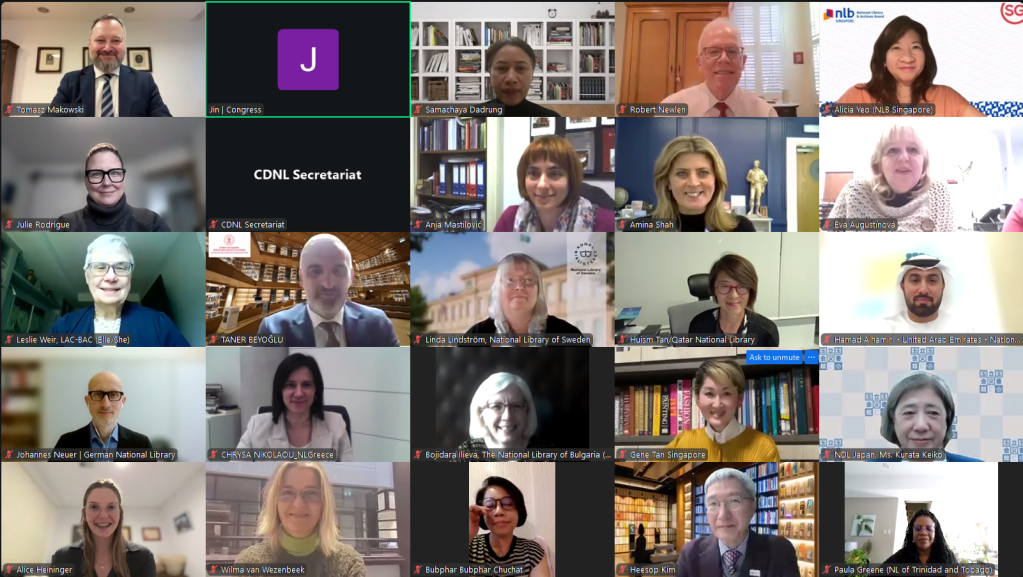
  • Group Zoom photograph

3. Event Highlights:

3.1. Keynotes

Three keynotes were provided during the event:

  • Prof. Peter Stone, President of Blue Shield International, presented an overview of the mission, evolution, and current activities of the Blue Shield — the international organisation dedicated to protecting cultural property in situations of armed conflict and disaster. Prof. Stone emphasised why cultural property matters: it provides communities with identity, dignity, belonging, and a vital connection to the past. He outlined the main risks to cultural heritage — from lack of awareness and insufficient planning to deliberate targeting, looting, misuse, neglect, and collateral damage. Prof. Stone also highlighted recent and ongoing Blue Shield initiatives, He stressed that effective cultural property protection must be a peacetime activity, requiring extensive preparation, partnerships, legal frameworks, and realistic evacuation planning.
  • Dr. Robert Glasser, former UN Special Representative of the Secretary General for Disaster Risk Reduction, outlined defining characteristics of the new climate era, emphasizing that national libraries must prepare for a rapidly changing risk environment with no historical precedent. He highlighted that climate impacts are accelerating at a nonlinear pace, with extreme heat events becoming up to 1,000 times more frequent and small changes in sea level dramatically increasing the likelihood of catastrophic flooding. At the same time, societal resilience is eroding, as many communities experience repeated disasters before recovery can occur. He also stressed the convergence of slow-onset hazards (humidity, sea-level rise, drought) with sudden-onset events (heatwaves, storms, atmospheric blocking), which increasingly occur simultaneously across regions. Climate change should therefore be understood not solely as an environmental challenge, but as a global systemic crisis with cascading impacts on energy systems, food security, infrastructure, and geopolitical stability. For national libraries these trends require a fundamental re-examination of disaster preparedness assumptions. 
  • Oleg Serbin, Director of the Yaroslav Mudryi National Library of Ukraine, presented an overview of the Yaroslav Mudryi National Library of Ukraine and its leadership role within the Ukrainian library sector during wartime conditions. Serbin described the physical infrastructure of the library (four buildings across Kyiv) and presented the damage sustained during Russian missile attacks, including the destruction of 100 m² of windows in the exchange and reserve collection building. He emphasised the role of international partners — including organisations from Germany, the United States, and Ukrainian NGOs — in funding and supporting restoration efforts. Serbin underlined that the library’s international cooperation has intensified significantly since 2023, with partnerships involving national libraries of Poland, Latvia, Lithuania, Germany, the UK, France, and others, as well as cooperation with EBLIDA, NAPLE, and IFLA. He presented large-scale national projects for safeguarding documentary heritage, including the development of the National Digital Library of Ukraine and a Czech–Ukrainian project to deploy mobile conservation and digitisation stations known as ARK 1 and ARK 2. 

Each Keynote was followed by a Q&A session with the speaker.

3.2. Small group discussions

Participants were divided into four groups to discuss the guiding question of: When collections are threatened: leading national libraries in difficult times – what is your experience?

Each small group had a facilitator who provided shared their own experience and guided the interactions with a series of questions and prompts.

4. Next CDNL Meeting

CDNL Chair and Dr. Heesop Kim, Chief Executive of the National Library of Korea, invited everyone to the next in-person meeting which will be held on August 11, 2026 in Busan, South Korea during the IFLA Congress.

5. Acknowledgements

We extend our deepest appreciation to:

  • All attendees and speakers for their invaluable contributions,
  • Our event partner, Congress Rental, for their support.

6. Group Photo
CDNL Online Meeting June 2025 – Post-Event Communique

1. Introduction

We are pleased to inform all CDNL members of the successful conclusion of an online CDNL conference, held on 05 June 2025. This gathering brought together leaders from over 30 libraries covering every continent and representing the diversity of CDNLs institutions.

The theme for the event was: ‘Lessons from Library Leaders – new and experienced’. Dr Marie-Louise Ayres, CDNL Chair and Director-General of the National Library of Australia, hosted the event from Canberra, Australia.

2. Key Objectives and Agenda

The event focused on the following key objectives:

  • Electing a Chair and Vice Chairs to vacant positions.
  • Sharing knowledge and building relationships between participants.
  • Facilitating candid discussions and thoughtful participant involvement.

The agenda included the following sessions:

  • An election for CDNL Chair and Vice Chairs
  • Keynote One: ‘Lessons from Library Leaders – new and experienced’, Dr Audrey Whitty, Director of the National Library of Ireland
  • Keynote Two: ‘A Leadership Story’, Dagnija Baltina, Director of the National Library of Latvia
  • Small group breakout discussions focussed on attendees’ early leadership experiences
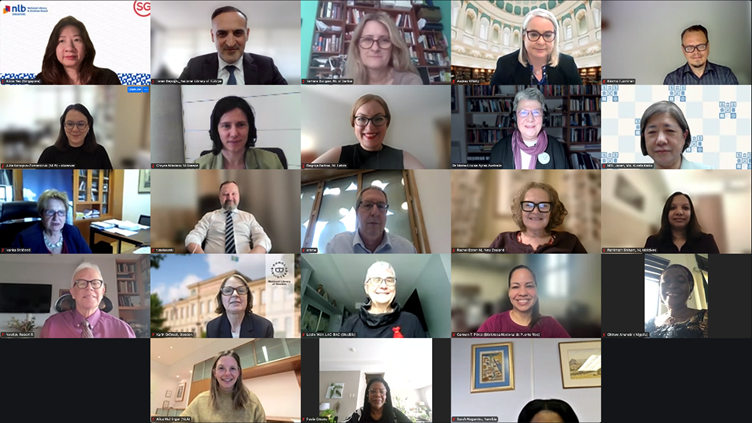
  • Group Zoom photograph

3. Event Highlights:

3.1. CDNL Committee Vote

From a strong field of candidates, three successful nominees were elected to the CDNL Committee:

  • Dr Tomasz Makowski, Director-General of the National Library of Poland, was promoted into the role of CDNL Chair from his Vice Chair position.
  • The successful Vice Chair nominees are:
    • Chinwe Veronica Anunobi, National Librarian and Chief Executive Officer of the National Library of Nigeria
    • Taner Beyoğlu, Director-General for Libraries and Publications, The National Library of Türkiye

A formal handover of positions will be conducted in August, at the CDNL Annual Meeting in Astana, Kazakhstan.

3.2. Keynotes

Two keynotes were provided during the event:

  • Dr Audrey Whitty, Director of the National Library of Ireland, reflected on her role and the relationship she has observed between her background as a curator and her current role managing a large-scale capital works program. Dr Whitty also addressed the common challenge of declining visitor numbers – particularly among a younger audience, and shared insights from the National Library of Ireland’s experience. She emphasised the importance of advocating for additional resources, even when the likelihood of success is low. In closing, Dr Whitty acknowledging that while increasing access to library buildings is essential, it will also place added pressure on staff – which will require proactive planning by her leadership team.
  • Dagnija Baltiņa, Director of the National Library of Latvia, shared reflections on her leadership philosophy and how it has been shaped by her personal context. She spoke candidly about the challenges of stepping into a leadership role following a long-standing predecessor, and the difficultly of comparison to, and losing, a mentor. Grounding her investigation in the history of the book at the Library in Latvia, Ms Baltiņa explored the evolving role of the library in the life of the individual and the state, through the following key themes: ‘Is a library a birthright?’, ‘Phenomenon of a book’, ‘Library as a habit’, ‘Libraries and statehood’, ‘Champions of curiosity’ and ‘The public good and public purpose.’  

3.3. Small group discussions

Participants were divided into four groups to discuss the guiding question of: What was the biggest surprise in your first years as the leader of your institution (good or bad)?

Each small group had a facilitator who provided shared their own experience and guided the interactions with a series of questions and prompts.

4. Next Steps

The following will occur after the event:

  • Action 1: Presenter PowerPoints, and any other relevant documentation, will be circulated to attendees where possible.
  • Action 2: Planning for the in-person 2025 CDNL Annual Meeting, scheduled for August 2025 (likely during the IFLA Congress in Astana, Kazakhstan).
  • Action 3: Handover materials will be prepared and passed to the new CDNL Committee members ahead of their terms commencing.

The Chair, Vice-Chairs and nominated support staff will be responsible for coordinating these actions.

5. Acknowledgements

We extend our deepest appreciation to:

  • Our new CDNL Committee members for their participation in the vote, and future work with the Committee.
  • All attendees and speakers for their invaluable contributions.
  • Our event partner, Congress Rental, for their support.

6. Group Photo
CDNL Annual Meeting 2024 – Post-Event Communique

1. Introduction

We are pleased to inform all CDNL members of the successful conclusion of the 2024 CDNL Annual Meeting, held on 03 October 2024 in Brisbane, Australia. The event convened National Library CEOs – and delegated deputies – with the primary goal of facilitating discussion and promoting understanding and cooperation on matters of common interest worldwide.

2. Key Objectives and Agenda

The event focused on the following key objectives:

  • Electing a Vice Chair to the vacant position
  • Building and sharing knowledge on matters of common interest; specifically, leadership during cyber security incidents
  • Establishing and deepening professional networks across national libraries worldwide

The agenda included the following sessions:

  • An election for CDNL Vice Chair
  • Three keynotes addressing ‘Leading Libraries through Cyber Security Disasters’:
    • Cyber Attack: Leadership Opportunity or Library Directors’ Nightmare? – Tomas Foltyn, Director of the Czech National Library
    • Cyber-attack on the British Library: what happened and what we’ve learned – Liz Jolly, Deputy Director of the British Library
    • The changing cybersecurity threat landscape in Australia and our region – Katherine Mansted, CyberCX.
  • Small Group Discussions focussed on knowledge sharing.

3. Highlights of Key Discussions

3.1. Welcome to Country
The event began a Welcome to Country provided by Johnno from Tribal Experiences, who welcomed all CDNL attendees by outlining the geography of Meanjin (Brisbane) and sharing his language and didgeridoo music.

3.2. Chair Opening Remarks

Remarks from the Chair, Dr Marie-Louise Ayres, outlined the theme of the event – Leading Libraries through Cyber Security Disasters. With these remarks Dr Ayres set expectations for participation, emphasising that all attendees act as representatives of their libraries, rather than their nations.

3.3. Vice Chair Election
Dr Ayres outlined the process for the election of a Committee Member and noted the Chair, and one of two Vice Chair positions (currently held by Leslie Weir, Librarian and Archivist of Canada), will be vacated in 2025. She welcomed participation from candidates who may be interested in these roles and spoke to the importance of a broad and diverse candidate pool.

The voting period for the unfilled Vice Chair role commenced on 02 October 2024, at 10:00 Australian Eastern Standard Time (AEST), initiated via an email sent to all CDNL members with a link to the online voting platform. Voting closed on 03 October 2024, at 10:00 AEST. Members attending in person in Brisbane were also provided the opportunity to cast their online ballot in person.

Four candidates were nominated for the position. Following the conclusion of the voting process, and a tallying of votes, the successful candidate was announced as Dr. Tomasz Makowski, Director-General of the National Library of Poland.

3.4 Panel Discussions and Keynotes
The three keynote speeches explored with the themes of leadership and cybersecurity, focussing specifically on leadership in times of crisis.

  • Cyber Attack: Leadership Opportunity or Library Directors’ Nightmare? – Drawing on his experience as a newly appointed director at the time of the 2021 cyber-attacks against the Czech National Library, Mr Tomas Foltyn outlined seven considerations for leaders during a cyber incident, as well as rules which he termed the ‘Magnificent Seven’.  Key lessons included the importance of continuous personal and organisational improvement, the benefits of robust and regular communication, and understanding when and how to engage with internal and external stakeholders. Additionally, he emphasised the critical role of sound disaster management policies and infrastructure. Mr. Foltyn conducted an in-depth analysis of how to apply each of these considerations and rules, supported by case studies. He concluded his address with the advice: “Stay watchful, stay cybersafe.”
  • Cyber-attack on the British Library: what happened and what we’ve learned – In her keynote, Ms Liz Jolly shared insights and lessons learned from the 2023 cyber-attack on the British Library, aimed at building collective resilience and fostering knowledge-sharing among international library colleagues. She discussed in detail the challenges of balancing communication needs with the constraints of an ongoing criminal investigation, managing an extended phased recovery of a complex system of systems, and navigating through periods of uncertainty. Reflecting on her personal experience, Ms Jolly highlighted the importance of celebrating milestones and counting progress – regardless of scale – and embracing adaptability, flexibility and decisive action.
  • The changing cybersecurity threat landscape in Australia and our region – Ms Katherine Mansted drew on her extensive experience in cybersecurity to provide attendees with practical examples of how libraries may find themselves at the forefront of cyber challenges, and what they may do to mitigate these risks. She highlighted that the core function of libraries—providing and facilitating access to information—creates a unique vulnerability for libraries. These vulnerabilities are compounded by a rapidly evolving and increasingly monetised cybercrime ecosystem, low deterrence rates in the cultural sector, and historical underinvestment in cybersecurity. She noted that, as a result, library leaders must develop robust strategies to address these risks. In her concluding remarks, Ms Mansted outlined several key mitigation strategies: leveraging the educational role of libraries to help build community cyber resilience; advocating for increased cyber hygiene, and championing increased government investment to strengthen institutions; pursuing regulatory reform to include libraries (in particular when referring to critical infrastructure) thereby enhancing response and deterrence capabilities; and maintaining libraries as spaces of democracy, openness and access in an increasingly polarised world.

3.5 Small Group Discussions
The final event of the day was a small group discussion. Rather than focus on cyber security, groups discussed general library leadership and questions:

  • As a CEO, how do you deliver new and/or different value for your organisation?
  • What do you consider to be unfinished business within your institution?
  • What are the biggest issues you see on the horizon for your institution?
  • As you reach the peak of your career, and possibly your most senior role at your institution, reflect on the young people coming through your organisation (are you seeing the right skills, experience, volume?) and what we could do as an industry to change things if required?

Each small group had a facilitator who provided brief remarks about the key themes and issues.  

4. Next Steps

The Chair identified post-event actions:

  • Action 1: Presenter PowerPoints, and any other relevant documentation, would be circulated to attendees where possible. A post-event communique would be released to all CDNL members.
  • Action 2: Planning would begin for an online CDNL meeting, tentatively scheduled for the first half of 2025.
  • Action 3: Planning would begin for the in-person 2025 CDNL Annual Meeting, scheduled for August 2025 (likely during the IFLA Congress in Astana, Kazakhstan).

The Chair, Vice-Chairs and nominated support staff will be responsible for coordinating these actions.

5. Closing Remarks

The event concluded with a call for ongoing cooperation and collective effort. Dr Ayres reaffirmed her commitment to CDNL and emphasised the ongoing need for the international library community to work collaboratively and proactively to address shared challenges, foster innovation, share knowledge, build collective capacity and strengthen libraries globally.

6. Acknowledgements

We extend our deepest appreciation to:

  • All attendees and speakers for their invaluable contributions.
  • Our event partner and host venue for their support.

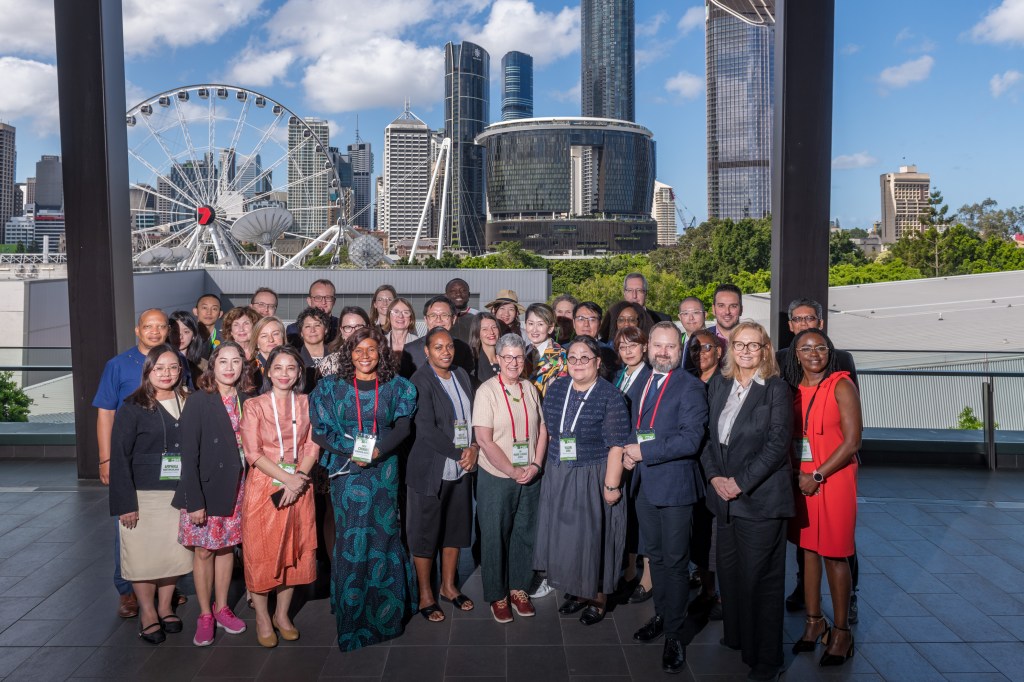
Group Photo:

Keynote Presentations: